Quarter Drop: Inside the American Obsession With Restoring Japanese Arcade Cabinets
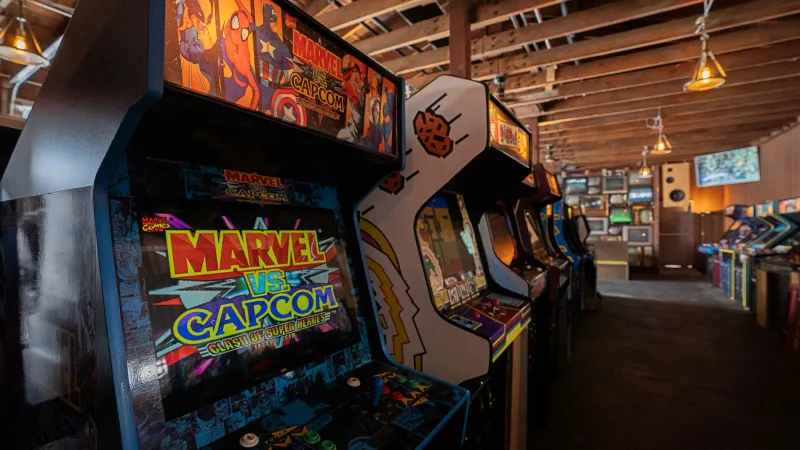
Derek Okafor didn't set out to spend $14,000 on arcade machines. It started, as these things often do, with one cabinet — a weathered Street Fighter II unit he spotted at an estate sale in suburban Columbus, Ohio, priced at a hundred and fifty bucks because the seller had no idea what they had. That was four years ago. Today, his basement holds eleven machines, including a pristine Capcom Alien vs. Predator cab he imported directly from a closing game center in Osaka.
"My wife says I have a problem," he tells me over the phone, laughing. "I say I have a collection."
Derek is far from alone. Across the United States, a quietly booming subculture has emerged around the acquisition, restoration, and display of Japanese arcade hardware. These aren't just nostalgic hobbyists chasing childhood memories — though there's plenty of that. They're craftspeople, engineers, and hardcore fans of Japanese gaming culture who see these machines as artifacts worth preserving. The intersection of Akihabara-style obsession and American DIY ingenuity has produced something genuinely remarkable: personal arcades that rival anything you'd find in a dedicated retro gaming bar.
Why Japanese Cabinets Specifically?
American arcade culture had its own golden age, obviously. But enthusiasts will tell you quickly that Japanese arcade hardware occupies a different tier entirely.
Japanese manufacturers — Sega, Capcom, Taito, SNK, Konami — built their cabinets to a standard that reflected the intense competition of the Japanese arcade scene. Boards were updated constantly. Monitors were high quality. Control surfaces were engineered for the kind of obsessive, technical play that defined Japanese arcade culture in the late eighties and through the nineties. The Astro City cabinet from Sega, in particular, has become something of a holy grail for American collectors — a universal standard chassis that hosted hundreds of games and is widely considered one of the best-designed arcade cabinets ever built.
"When you sit down at a real Astro City, you understand immediately why the Japanese arcade scene produced the best players in the world," says Marcus Tran, a Houston-based collector who runs a popular restoration channel on YouTube. "Everything about the ergonomics is right. The stick throw, the button layout, the monitor angle. It's not nostalgia. It's genuinely superior hardware."
The Import Pipeline
Getting Japanese arcade hardware to American soil has gotten significantly more accessible over the past decade, though it's still not simple.
The most direct route is through Japanese auction sites, primarily Yahoo Auctions Japan, which functions as the country's dominant secondhand marketplace. Cabinets and boards move through there constantly, particularly as Japan's remaining game centers continue to close at a steady rate. The challenge is logistics: most sellers don't ship internationally, which means buyers typically work through proxy purchasing services that handle the domestic auction, packaging, and international freight.
Shipping costs vary wildly depending on weight and destination, but collectors estimate that freight alone for a full-size cabinet can run between $400 and $900, depending on whether you're willing to wait for sea freight versus paying premium rates for air shipping. Add in the purchase price — which can range from a few hundred dollars for a common board to several thousand for a pristine, sought-after cabinet — and you're looking at a meaningful financial commitment before you've even started on restoration.
Alternately, a growing network of American importers and specialty dealers has emerged to serve the market. These businesses do the heavy lifting of sourcing and shipping in bulk, then resell domestically. You'll pay a premium over buying direct, but you avoid the complexity of international logistics and typically get some basic condition assessment before purchase.
The Restoration Process
Here's where the real work begins — and where the community really shines.
Japanese arcade hardware from the late eighties through the late nineties is now thirty-plus years old. Capacitors fail. Monitors develop issues. Control surfaces wear down. Power supplies degrade. A cabinet that looks decent in auction photos can arrive with a list of problems that would intimidate anyone who isn't prepared.
The good news is that the restoration community is extraordinarily well-documented. Forums like Arcade Projects and KLOV host decades of accumulated knowledge. YouTube channels dedicated specifically to Japanese arcade restoration have built substantial followings. And the community culture leans hard toward sharing — experienced restorers are generally happy to walk newcomers through problems.
Common restoration tasks include recapping monitors (replacing aged capacitors to restore picture quality), cleaning and rebuilding control surfaces, replacing worn joystick microswitches, and addressing board-level issues with the game hardware itself. Costs vary enormously: a basic cap kit for a monitor might run $30 and an afternoon of careful work, while a significant board repair could require sending the PCB to a specialist and spending several hundred dollars.
"I always tell people to budget at least 20-30% on top of whatever they paid for the machine for restoration costs," says Tran. "If you buy something in rough shape because it was cheap, you'll spend that and more. There's no such thing as a free arcade cabinet."
The Space and Display Question
Full-size Japanese cabinets are substantial pieces of furniture. A standard Astro City stands about 67 inches tall and weighs somewhere in the neighborhood of 300 pounds. Most American homes weren't designed with this in mind.
The collector community has developed creative solutions. Finished basements are the obvious choice — good climate control, out of the main living area, and often enough square footage to build a legitimate game room. Garages are popular but require climate management, since temperature and humidity swings can damage electronics and wood over time. A small but dedicated group of enthusiasts have converted entire rooms or even outbuildings into dedicated arcade spaces.
Lighting is a surprisingly important consideration. The neon and fluorescent aesthetic of a real Japanese game center is achievable on a budget, and it transforms the experience of playing these machines from "thing in my basement" to genuine immersive environment.
More Than Hardware
What strikes you when you spend time in this community is how deeply it connects to a broader love of Japanese gaming culture. These collectors aren't just interested in the machines as objects — they're interested in the history embedded in them. The specific regional versions of games. The operator modifications that changed difficulty settings for Japanese versus export markets. The story of a particular game center that kept a cabinet running for twenty years before finally closing.
That sensibility — the belief that these objects carry cultural meaning worth preserving — is what distinguishes serious collectors from people who just want a cool thing in their rec room. It's the same impulse that drives figure collectors to research production runs and hunt for limited variants. It's Akihabara culture transplanted into American garages, doing the work of keeping a remarkable slice of gaming history alive.
Derek Okafor is already eyeing his next acquisition: a Puzzle Bobble cabinet he spotted on Yahoo Auctions that's sitting in a warehouse in Nagoya. "I told my wife it's an investment," he says. There's a pause. "She didn't believe me either."