Two Hundred Quarters Later: The Real Cost-Per-Win Math Behind America's Claw Machine Boom
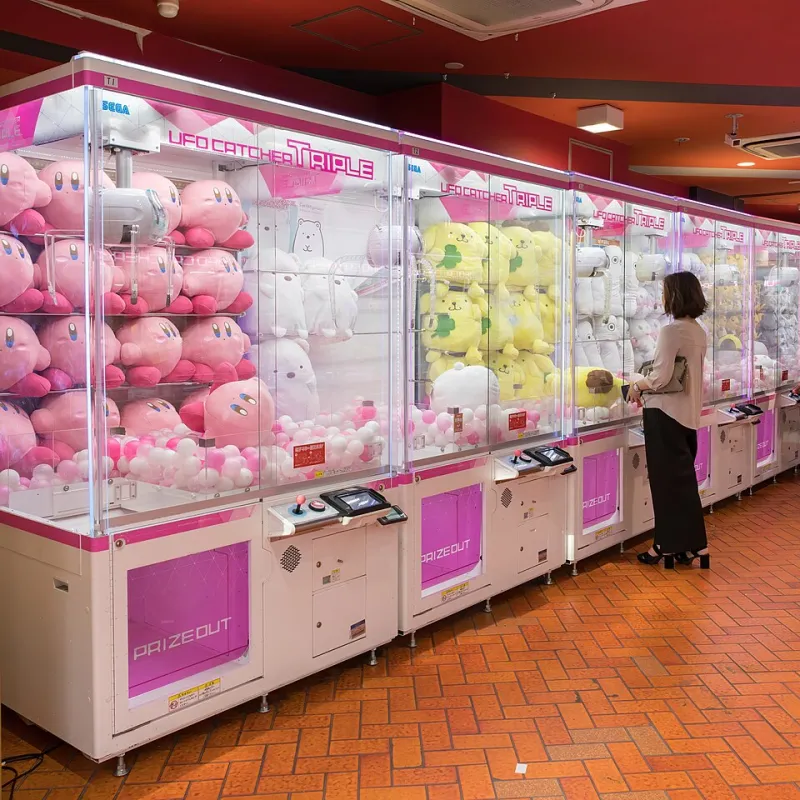
Photo: Basile Morin, CC BY-SA 4.0, via Wikimedia Commons
Walk into almost any Japanese grocery store, mall anime shop, or convention hall in the US right now and you'll find the same thing: a glowing glass box, a pile of plush, and a small crowd of adults in their thirties taking this extremely seriously.
The Japanese-style claw machine has quietly become the cheapest point of entry into arcade collecting in America. It's also the most efficient way to spend $60 on a plush you could have bought for $18. Both of those things are true, and understanding the gap between them is the difference between a fun afternoon and a genuine regret.
How the Machines Got Everywhere
These aren't the wobbly grocery-store claws of the nineties. The current wave traces back to Japanese crane game culture, where the machines are a fixture of every arcade and the prizes are actual merchandise — plush, figures, towels, keychains tied to whatever show is currently airing. As Japanese retail chains expanded into the US and anime shops multiplied in malls, the machines came along as both entertainment and a secondary revenue stream. Convention organizers noticed the lines and booked more of them.
Demographically, this is a machine built for people with disposable income and a collector instinct. A $20 loss at a casino feels bad. A $20 loss at a claw machine comes with a near-miss story you'll tell your friends, which is a much better deal emotionally.
The Actual Cost-Per-Win
Most US machines run $1 to $2 per play, with some convention floors pushing $3. Prizes range from generic plush worth $8 retail to imported characters worth $25 to $40. The math problem is that the good prizes are, by design, the hardest to win.
Start with a rough sketch of the odds. A machine with a prize sitting perfectly balanced on the chute edge is nearly a guaranteed grab — call it three plays, around $6. A machine with a ladder of plush stacked in a wall, which is what most of the good ones look like, might run you eight to twenty plays before physics cooperates. A particularly cruel setup can eat $40 without a win.
So run the comparison honestly. Ten plays at $2 is $20. If you're chasing an imported plush that retails for $22 before shipping, you're at break-even at best — and you don't get to pick which character you win. If you're chasing a $40 figure that you specifically wanted, the machine is almost never the correct purchase. Buy the figure, save the glass box for the fun of it.
What's Actually Behind the Glass
Prize quality varies wildly and it's worth knowing what you're looking at. Some machines are stocked with genuine Japanese arcade prizes — the same UFO catcher plush sold in Japanese arcades, sometimes with the tag still attached. Others are filled with generic wholesale plush that looks similar at a glance but has the stitching quality of a carnival prize. A few shops stock authentic import goods as a draw, which is where the machines actually become interesting.
Look for licensed tags, brand names you recognize, and embroidery rather than printed-on faces. A machine stocked with recognizable characters is being run by someone who takes it seriously, and your odds of walking away with something you'd actually display go up considerably.
Operator Tricks You Should Know
Nobody is cheating you; the odds are disclosed by physics. But the settings are absolutely tuned, and knowing the common patterns helps.
Claw strength cycles. Many machines alternate grip strength, so a weak grab on play four can be followed by a strong one on play five. Watch for a couple of minutes before committing.
Pity policies. A lot of independent shops and convention vendors keep a rule where staff will reposition the prize or hand you the win after a set number of plays. Ask before you start, not after you've spent $30.
The impossible prize. If something looks famously unwinnable, it probably is. That's the display piece. Ignore it.
The chute-edge setup. The best machines have good prizes already near the drop. If everything good is buried in the back corner, the machine is telling you something.
Playing Without Hating Yourself
Set a hard number before your first dollar — ideally the retail price of the prize you actually want — and stick to it. Pick machines with prizes near the chute rather than the tallest plush mountain. Aim for the center of mass, not a floppy limb. Use the two-finger trick on grippy plush if the claw readjusts. And learn to walk away mid-crane, which is a skill in itself.
Most importantly, decide in advance what the win is for. If it's a souvenir of a genuinely fun twenty minutes with friends, the machine is a great deal no matter the math. If it's a substitute for buying the collectible you wanted, it is the most expensive way to shop in that building.