Built by Fans, Shipped to Fans: The DIY Merch Revolution Happening Inside Anime Gaming Discords
There's a Discord server out there — several thousand members strong — dedicated entirely to a tactical RPG that sold modestly in Japan and got a quiet digital release in the US four years ago. The game has no ongoing merchandise support. The publisher moved on. But the community didn't. Last year, members of that server collectively funded a 120-page full-color art book featuring original illustrations commissioned from fan artists, a run of enamel pins, and a set of acrylic standees. They designed everything, found the manufacturers, handled fulfillment, and shipped orders to collectors in 14 countries.
This is not an isolated story. It's a pattern.
When Official Merch Doesn't Exist, Fans Build It
The anime gaming merchandise market has always had gaps. Publishers prioritize their biggest franchises. Niche titles — even beloved ones with dedicated audiences — often age out of active merchandise support within a year or two of release. For fans of these games, the secondary market dries up fast, and new official product simply stops coming.
Fan communities have historically responded to this with fan art, fan fiction, and cosplay. What's changed in the last few years is scale and ambition. The tools available to organize group buys, commission professional-quality manufacturing, and handle international fulfillment have improved dramatically. Platforms like Kickstarter and Backerkit gave communities a framework for crowdfunding physical goods. Services like Vograce, Sticker Mule, and a network of Chinese and Southeast Asian manufacturers specializing in small-run production have made it feasible to produce quality merchandise in quantities of 50 to 500 units — numbers that no major publisher would bother with, but that a dedicated fan community can actually move.
What These Communities Are Actually Making
The range of DIY fan merchandise coming out of anime gaming communities in the US right now is genuinely impressive.
Art books are one of the most common projects. Communities commission multiple fan artists — often people already known within the fandom — to contribute illustrations, lore essays, or character analyses. The result gets laid out by a volunteer designer, sent to a print-on-demand or offset printer, and sold at cost or slight markup to cover production expenses. Some of these books are legitimately beautiful objects. High-quality paper stock, professional binding, full-bleed artwork. They'd hold their own next to official releases.
Enamel pins and acrylic charms are the entry-level product for communities just starting out. The minimum order quantities are low, the per-unit cost is manageable, and the risk is limited. A lot of communities start here before graduating to bigger projects.
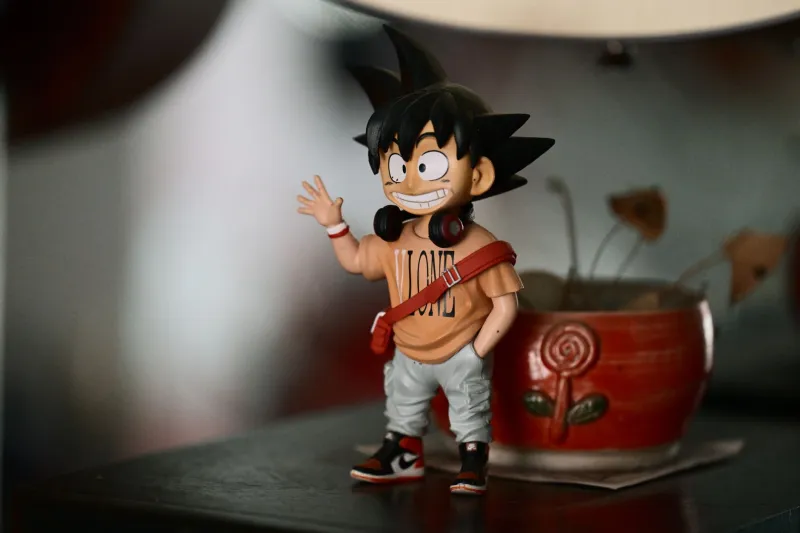
Custom figures and garage kits sit at the ambitious end of the spectrum. Some communities have commissioned sculptors — often found through social media or ArtStation — to produce original character figures based on games that never got official figure support. These are typically produced in small resin runs, hand-cast and hand-painted. They're expensive, time-consuming, and absolutely coveted by the fandoms they serve.
Gaming peripherals are a newer frontier. Custom keycaps featuring game-specific artwork, mouse pads with original designs, and controller faceplates have all appeared in niche anime gaming communities. The manufacturing infrastructure for these products has become accessible enough that organized communities can pull them off.
The Legal Gray Zone Nobody Wants to Talk About
Here's the part that makes everyone a little uncomfortable: most of this merchandise exists in legally ambiguous territory.
Fan-made merchandise based on copyrighted characters and intellectual property is, technically, infringement. The characters belong to the publishers. The artwork styles and designs are protected. A community producing and selling acrylic standees of a game's cast without a license from the publisher is, strictly speaking, operating outside the law.
In practice, enforcement is inconsistent and often publisher-dependent. Some Japanese publishers take an aggressive stance — Nitroplus and Type-Moon have historically been protective of their IP. Others operate under something resembling a tacit tolerance policy, particularly for non-commercial or low-profit fan projects. Nintendo is famously litigious. Other publishers have never issued a single cease-and-desist against fan merchandise operations.
Communities navigate this by keeping a low profile, avoiding large-scale commercial promotion, framing projects as "for fans, by fans" rather than commercial enterprises, and pricing at or near cost. Some explicitly prohibit reselling project goods to maintain the non-commercial framing. None of this is a legal shield — it's more of a risk management approach.
The communities doing this aren't naive about the situation. They know the risks. They proceed anyway because the alternative is simply having nothing.
What This Means for the Broader Collector Market
From a market perspective, the DIY fan merch movement is doing something interesting: it's revealing demand that official publishers are failing to capture. When a community of 3,000 people sells out a 300-unit art book run in 48 hours, that's a signal. The publisher whose IP those fans are celebrating has a monetization opportunity they're leaving on the table.
A few publishers have started paying attention. Some have begun reaching out to active fan communities — not to shut them down, but to explore official collaboration. Fan artists who built reputations through community projects have been hired for official merchandise lines. The DIY ecosystem, in some cases, is functioning as an R&D pipeline for what official merch could look like.
For US collectors, the practical upshot is a richer, stranger, more varied landscape of available goods than existed five years ago. Official merchandise still dominates the high end — nobody's fan-commissioning a 1/7-scale painted PVC figure for $80 retail. But for the niche games, the forgotten favorites, the titles that never got their moment in the sun commercially? The fans have already built the merch. You just have to know where to find them.