Electric Town Dreams: How Akihabara Rewired the Way American Anime Fans Shop, Connect, and Collect
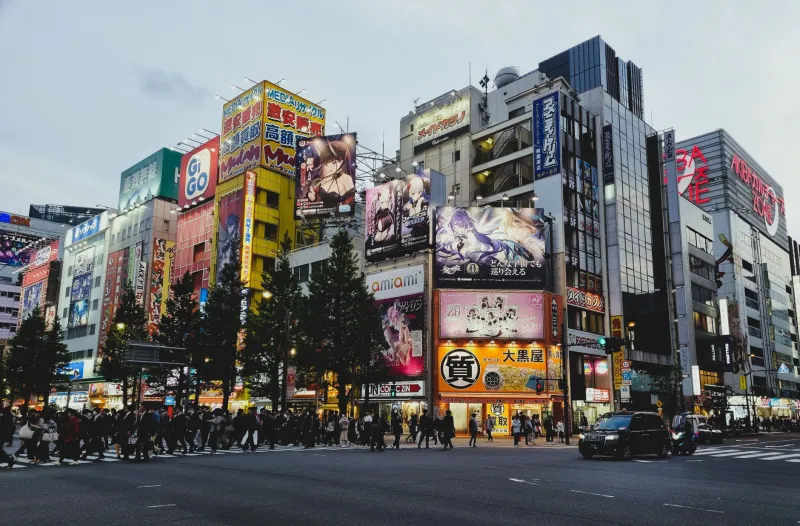
Walk through the neon-lit corridors of Akihabara on any given Saturday and you'll immediately understand why anime fans across the globe treat it less like a shopping district and more like a sacred pilgrimage site. Floors stacked with vintage Famicom cartridges. Maid cafes spilling cheerful greetings onto crowded sidewalks. Towering shelves of limited-edition figures still sealed in their original packaging. It's overwhelming in the best possible way — and for American collectors who've made the trip, it's also deeply familiar.
That familiarity isn't a coincidence. Over the past three decades, Akihabara has quietly served as the blueprint for how anime fandom operates in the United States. From the layout of specialty stores to the social rituals of collector meetups, the Electric Town's fingerprints are everywhere.
Where It All Started: A Brief History of the World's Most Famous Nerd District
Akihabara's transformation from a post-war black market for electronic parts into a global pop culture landmark didn't happen overnight. Through the 1980s, the district was already a haven for electronics enthusiasts and early home computer hobbyists. But when Japan's otaku culture began to explode in the late '80s and early '90s — fueled by the rise of anime, manga, and video games — Akihabara evolved right alongside it.
Retailers quickly figured out that the same customers buying PC components also wanted Gundam model kits and Sailor Moon merchandise. Stores began stacking inventory floor to ceiling, creating the dense, treasure-hunt shopping experience that the district is now famous for. By the mid-2000s, Akihabara had fully cemented its identity as the global headquarters of otaku culture, drawing international visitors and inspiring coverage in Western media that introduced millions of American fans to its unique atmosphere.
For many US collectors, their first exposure to Akihabara came through documentaries, YouTube travel vlogs, or the iconic scenes from anime like Steins;Gate, which literally set its story in the district. That cultural osmosis planted seeds that would eventually grow into something distinctly American — but unmistakably rooted in Tokyo's Electric Town.
The American Translation: What Made It Across the Pacific
Not everything about Akihabara translated cleanly to American soil, and that's okay. Maid cafes, for instance, remain a novelty in the US rather than a staple. But several core elements of the Akihabara experience have found very comfortable homes on this side of the Pacific.
The Multi-Floor Specialty Store Model Anyone who's visited a large anime retailer in cities like Los Angeles, New York, or Chicago has essentially walked into an Akihabara-inspired space. The idea of dedicating an entire building — or at minimum, multiple floors — to anime merchandise, gaming collectibles, manga, and imported goods is a direct descendant of Akihabara's retail philosophy. Stores like Kinokuniya in major US cities carry that same spirit of abundance and discovery.
The Hunt Culture Ask any serious US collector what they love most about the hobby and they'll almost always mention the thrill of the hunt. That mentality comes straight from Akihabara, where digging through bins of used games or spotting a rare figure tucked behind newer stock is half the fun. American collectors have recreated this experience through thrift store runs, convention dealer rooms, and online marketplace deep dives.
Community as Commerce In Akihabara, shops aren't just transactional spaces — they're gathering places. Collectors linger, compare finds, and swap knowledge. That same dynamic plays out at US anime conventions, local game shops, and the Discord servers that have become the digital version of hanging out in a Akihabara back alley store.
Collector Stories: The Akihabara Effect in Real Life
We talked to a handful of dedicated US collectors about how Akihabara has shaped their approach to the hobby.
Marcos, a 34-year-old figure collector based in Houston, Texas, describes his first visit to Akihabara as a turning point. "Before I went, I was buying figures kind of randomly. After walking through those stores and seeing how seriously people approached their collections — the display cases, the condition grading, all of it — I completely changed how I thought about what I was building," he says. "I came home and basically reorganized everything."
For Jessica, a vintage gaming collector in Portland, Oregon, Akihabara introduced her to a level of market knowledge she hadn't encountered in American collecting spaces. "The shop owners there know everything about their inventory. The condition, the rarity, the price history. It made me realize I needed to actually study what I was collecting, not just buy stuff I thought looked cool."
That educational aspect of Akihabara culture — the idea that serious collectors are also serious students of their hobby — has definitely taken root in US communities. Online forums, YouTube channels dedicated to authentication and valuation, and collector-run social media accounts all carry that same spirit of shared expertise.
Building Your Own Electric Town
Here's something worth sitting with: you don't need to book a flight to Tokyo to experience a version of what Akihabara offers. American anime culture has matured to the point where dedicated communities exist in virtually every major city, and the online ecosystem has made importing directly from Japan more accessible than ever.
Fan-organized swap meets, local anime clubs, and convention after-parties have become the American equivalent of Akihabara's social shopping culture. And sites like ours at Akihabara Shop exist specifically to bridge the gap — bringing that curated, specialty-store experience to US collectors who want authentic Japanese merchandise without the 14-hour flight.
The real legacy of Akihabara in America isn't any single product or store. It's a philosophy: that being a fan is worth taking seriously, that community and commerce can coexist beautifully, and that the perfect find is always just one more search away.
The Road Ahead
As anime continues its march into mainstream American culture, Akihabara's influence is only going to deepen. Japanese pop culture brands are increasingly aware of their US fanbase and are designing releases with international collectors in mind. Collaborations between Japanese manufacturers and American retailers are becoming more common. And a new generation of fans — many of whom discovered anime through streaming platforms rather than import VHS tapes — are building collecting habits that blend Akihabara's traditions with distinctly American sensibilities.
The Electric Town may be thousands of miles away, but its spirit has never felt closer. And for those of us who've built our lives around this hobby, that's something worth celebrating.