Follow the Money: How Streamers Are Engineering Your Anime Merch Wishlist Without You Noticing

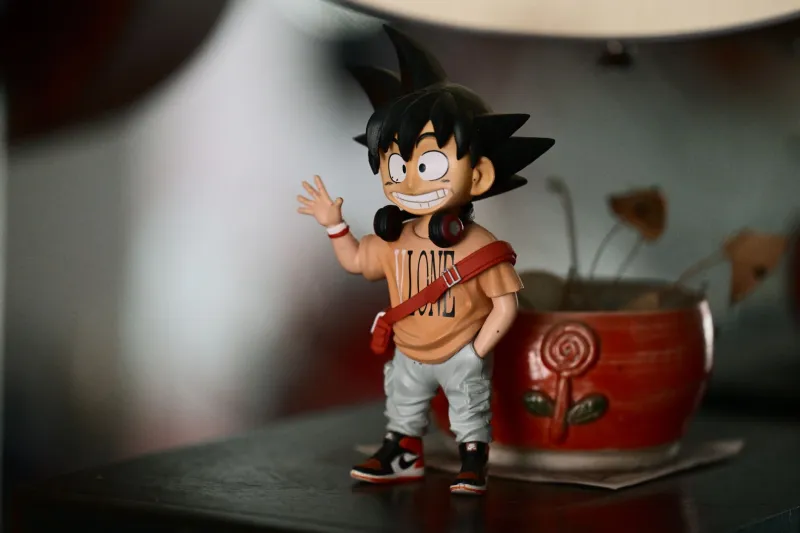
You're watching your favorite gaming streamer run through a new anime title when they casually hold up a figure. "Oh, by the way," they say, with the practiced ease of someone who has done this a hundred times, "the preorder for this just went live and I heard there are only a few hundred units. Just saying." They don't linger on it. They move on. But the comment section explodes.
Within twenty minutes, the preorder link in their bio has logged thousands of clicks.
This is not a coincidence. It is a system — sophisticated, well-funded, and specifically engineered to feel like anything but a sales pitch. And if you're a fan of anime merchandise, gaming collectibles, or Japanese pop culture imports, understanding how it works could save you real money.
The New Anatomy of a Merch Drop
The days of anime merchandise simply appearing on shelves and waiting for fans to discover it are largely over, at least for the products that generate serious revenue. Modern collectible drops — limited-edition figures, exclusive gaming peripherals, collaboration apparel — are orchestrated campaigns that can involve dozens of content creators and months of advance coordination.
Here's the basic playbook. A manufacturer or distributor identifies a window tied to either a product launch or a cultural moment (a new anime season, a game release, a convention). They reach out to a curated network of streamers and content creators, typically offering free product, affiliate commission on sales, or flat-rate sponsorship fees in exchange for coverage. The creators are often given staggered release timing — some tease the product, others do full reveals, others post "reaction" content to the reveal — creating the illusion of organic, spreading excitement.
The scarcity framing is almost always part of the brief. "Limited run." "Only available this weekend." "First batch already 40% gone." These phrases aren't descriptions of reality — they're instructions. Creators are often coached on language that creates urgency without technically making false claims.
"I've been sent literal talking points," one mid-level anime gaming streamer told us, asking to remain anonymous to protect business relationships. "Not scripts, but suggested phrases. Things like 'I've never seen them do a run this small' or 'my community is going to be upset if they miss this.' It's soft direction, but it's definitely direction."
Why It Works So Well on Anime Fans Specifically
Anime and gaming fandoms are particularly susceptible to this approach, and it's worth being honest about why rather than just feeling defensive about it.
Fandom identity is deeply tied to ownership within these communities. Displaying a figure, wearing a collaboration hoodie, or owning a limited peripheral is a form of community participation. Missing a drop doesn't just mean not having a thing — it can feel like falling behind, being less of a fan, losing connection to a shared cultural moment. That emotional weight is real, and marketers know it.
The streamer relationship amplifies this significantly. Unlike a billboard or a banner ad, a streamer recommendation comes wrapped in parasocial trust. You've watched this person for hundreds of hours. You feel like you know them. When they express genuine enthusiasm for a product, it's genuinely hard to separate authentic excitement from paid promotion — especially when disclosure is buried in a description box or mentioned once at the start of a three-hour stream.
Add to that the comment section dynamics. When a streamer drops a merch mention and the chat immediately floods with enthusiasm, you're not seeing organic community reaction — you're often seeing a combination of actual excited fans, community members who've learned that engagement on these moments keeps the streamer's algorithm healthy, and in some cases, coordinated early-bird purchasers who create social proof intentionally.
How to Read the Room
None of this means every streamer recommendation is a manipulation, or that products featured in streams aren't worth buying. It means you need a framework for evaluating what you're seeing.
Start with disclosure. FTC guidelines require streamers to disclose paid partnerships, but enforcement is inconsistent and the disclosure itself is often technically compliant but practically invisible. Train yourself to notice when disclosure is absent or buried. If a streamer mentions a product enthusiastically with no disclosure, ask yourself whether they've mentioned this brand before, and whether they have an affiliate link in their bio.
Watch for scarcity language without specifics. "Limited quantities" without any actual numbers is almost always a marketing frame rather than a factual statement. Real scarcity has specifics: a print run of 500 units, a 48-hour window, a numbered certificate. Vague urgency language is designed to trigger a fear response, not inform a decision.
Check the product independently before purchasing. If a figure or collectible is worth owning, it'll still be worth owning after you've spent ten minutes looking at it on the manufacturer's site, reading actual collector reviews, and checking whether similar items have appeared at lower prices elsewhere. Anything that can't survive a ten-minute cooling-off period is probably benefiting from manufactured urgency.
Look at the streamer's history with the brand. A one-off mention of a product the streamer has never discussed before is a different situation than a streamer who has organically covered a manufacturer for years and has a genuine relationship with their products. Context matters.
The Streamers Worth Trusting
It would be unfair to paint the entire creator ecosystem as a manipulation machine, because that's not accurate either. There are streamers in the anime gaming space who have built genuine reputations for honest product coverage — who turn down partnerships that don't fit their audience, who flag mediocre products even when they've been gifted them, and who are transparent about what they're paid to promote versus what they genuinely recommend.
These creators tend to share a few characteristics: they have clearly stated policies about sponsorships, they discuss products critically rather than exclusively positively, and they don't create artificial urgency around every drop. They also tend to have communities with strong norms around calling out promotional content — fans who will ask directly "is this sponsored?" and get a straight answer.
Finding these creators takes some effort, but it's worth it. They're the ones who'll actually save you money over time, because their recommendations carry signal rather than noise.
Your Wallet, Your Call
Here's the thing: there's nothing inherently wrong with buying anime merchandise because a streamer you like made it look cool. Fandom spending is a valid form of self-expression, and the products themselves — the figures, the limited peripherals, the collaboration drops — are often genuinely excellent.
The problem isn't enthusiasm. It's the gap between what you actually want and what you've been engineered to want in a specific moment. That gap is where regret lives, and it's where a significant amount of collector spending ends up.
The best tool against it isn't cynicism — it's a short pause. Close the tab. Come back tomorrow. If you still want it then, buy it with confidence. If the urgency has evaporated, you have your answer about who was really driving that impulse.
Your collection should reflect your taste, not someone else's affiliate commission structure.