Retail Price or Bust: How Anime Collectors Are Waging War Against the Scalping Machine
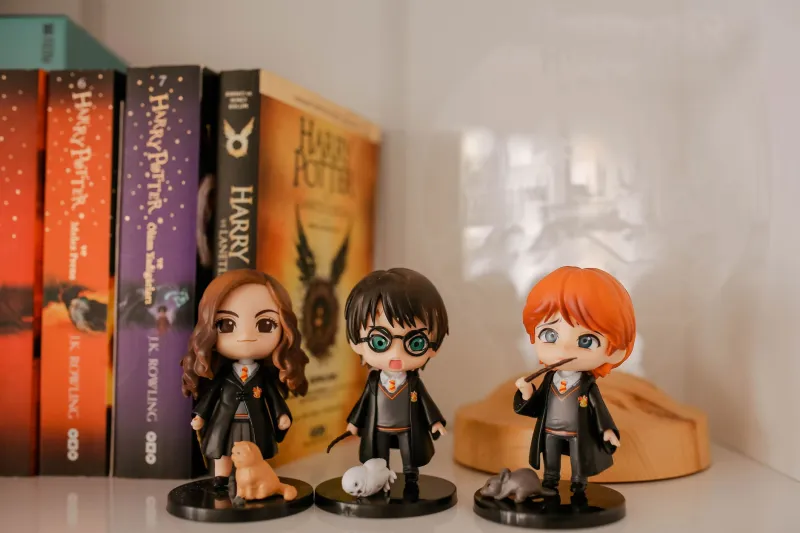
If you've ever tried to snag a limited Good Smile Company figure or a first-print run of a Japanese RPG collector's edition, you already know the gut-punch feeling. You refresh the page. You wait. You click "Add to Cart" the second the clock hits 12:00 PM — and somehow, within three seconds, it's sold out. By 12:05, the same item is listed on eBay for three times the retail price.
Welcome to the modern anime merch battlefield, where bots move faster than human fingers and reseller networks have turned hobby collecting into a financial arms race.
The Numbers Don't Lie — And They Hurt
The scale of the problem is genuinely staggering. A Nendoroid that retails for around $65 can routinely flip for $150 to $300 on secondary markets within hours of a limited release. Highly sought-after scale figures from manufacturers like Alter or Max Factory? Those can spike to four or five times their original MSRP when supply is tight. During the height of pandemic-era supply chain disruptions, some collectors reported seeing figures they'd pre-ordered — only to have retailers cancel orders — showing up on StockX and Mercari at markups that would make a sneakerhead blush.
"I missed the Hololive Myth figure set by literal milliseconds," says Marcus, a collector based in Austin, Texas, who's been building his anime shelf since 2015. "Thirty minutes later I'm watching someone on Twitter brag about listing four sets at $400 each. It's demoralizing. These things are supposed to be for fans."
The economics driving this aren't complicated, even if they're infuriating. Low production runs, high global demand, and an increasingly sophisticated reseller infrastructure have created a perfect storm. Automated purchasing bots — the same technology that has decimated sneaker drops and GPU launches — have migrated aggressively into the anime merchandise space. Some resellers operate with scripts that monitor multiple storefronts simultaneously, executing purchases the moment inventory goes live.
Who's Actually Doing This?
It's tempting to paint scalpers as shadowy villains, but the reality is messier. When we reached out to a few resellers willing to talk (anonymously, naturally), the picture that emerged was surprisingly mundane.
"I started flipping Funko Pops during COVID," one reseller from the Pacific Northwest explained. "Anime stuff was just the next logical step. The margins are better and the buyer base is passionate — passionate people pay more." He estimates he clears between $1,500 and $3,000 a month flipping figures and gaming collectibles, treating it as a side hustle rather than a full-time gig.
Another reseller, who described herself as someone who "genuinely loves anime," framed it differently. "I buy two of everything I want. One for me, one to sell. The money I make covers the cost of my own collection. Is that really scalping, or just smart shopping?"
Fans, understandably, have a different word for it.
The Grassroots Counterpunch
Here's where the story gets genuinely interesting: collectors aren't just complaining on Reddit. They're organizing.
Across Discord, a sprawling ecosystem of anti-scalping communities has emerged, and these groups are remarkably sophisticated. Servers like those dedicated to figure collecting and anime merch drops have developed their own alert systems — ironically, using bots of their own — to notify members the instant restocks hit retailers like AmiAmi, Crunchyroll Store, Right Stuf (now under Crunchyroll's umbrella), and BigBadToyStore.
"We basically built our own early-warning network," says Priya, a moderator for one such Discord server with over 8,000 members. "The moment a restock pops up anywhere — Japanese importers, domestic retailers, even manufacturer sites — our bot pushes an alert. We've helped hundreds of people actually get items at retail."
These communities also maintain shared blacklists of known scalper accounts across platforms, crowdsource information about upcoming release windows, and coach newer collectors on how to set up purchase alerts and navigate import sites. Some even pool resources to split shipping costs on international orders, making direct purchases from Japanese retailers more accessible for American fans who might otherwise be priced out.
Beyond Discord, there's been a broader cultural shift in how collectors talk about and shame scalping behavior publicly. Twitter callouts, Reddit threads documenting egregious price gouging, and organized campaigns to avoid purchasing from known resellers have all added social pressure to what was once a largely consequence-free activity.
What Are Manufacturers and Retailers Actually Doing?
The industry response has been uneven, to put it charitably. Some manufacturers have introduced purchase limits — Good Smile Company's online shop, for instance, has implemented one-per-customer rules on certain high-demand items. A handful of retailers have experimented with lottery systems, where interested buyers enter for a chance to purchase rather than competing in a speed-click free-for-all.
But enforcement is notoriously difficult. Determined resellers use multiple accounts, shipping addresses, and payment methods to circumvent per-customer limits. And the sheer volume of releases across dozens of manufacturers and storefronts makes consistent policing nearly impossible.
Some in the collector community have called for manufacturers to simply increase production runs on popular items — an obvious solution that runs into the reality of how the Japanese figure industry actually works. Many manufacturers deliberately keep runs limited to maintain brand prestige and reduce financial risk. It's a model that made sense before global social media turned every limited release into a worldwide demand event.
The Unsustainable Ceiling
There's a reasonable argument that the scalping economy is, at least partly, self-correcting. Secondary market prices depend entirely on someone being willing to pay them. As more collectors refuse to buy from resellers on principle — or simply can't afford to — the calculus for scalpers changes.
"I've watched certain figures that were flipping at $300 drop back to $90 over six months because nobody would bite," Marcus notes. "Patience is a weapon if you can use it."
Still, for genuinely rare or discontinued items, patience doesn't always pay off. Some figures simply never restock, and the secondary market price becomes the only market price.
What's clear is that the collision between global anime fandom and limited-supply collectible culture has created an economic friction point that isn't going away anytime soon. The fans who love this stuff most are often the ones getting squeezed hardest — and they're increasingly unwilling to just accept it.
The grassroots fight back isn't flashy. It's Discord pings at 2 AM, shared spreadsheets, and collective refusal to feed the resale machine. But for a community built on passion, that kind of stubborn, organized persistence feels pretty on-brand.