Don't Be That Tourist: An Akihabara Field Guide for First-Time American Shoppers
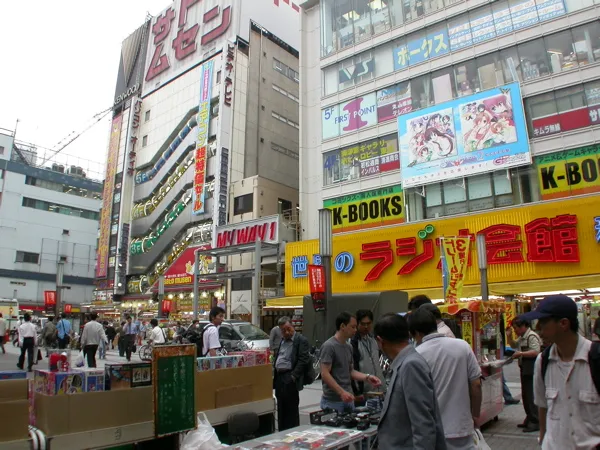
Photo: Nickdrj, Public domain, via Wikimedia Commons
Akihabara is a lot to walk into. You step off the train, turn a corner, and the entire street is competing for your attention in four languages at once. For an American fan who's spent a decade buying Japanese collectibles through a screen, the first visit is genuinely emotional — and also the most likely place you'll accidentally be rude, overspend, or haul a suitcase that costs more to fly home than the figures inside it.
This isn't a shopping list. It's the operational stuff that nobody puts in a haul video.
Before You Go: The Mental Checklist
Bring your passport. Not a photo of it, not a driver's license — the actual passport, because that's what unlocks tax-free shopping and you cannot get that money back later. Bring a packable duffel bag, a luggage scale, and a second debit card that doesn't charge foreign transaction fees.
Do not build your entire trip around one specific rare item. Restock schedules, secondhand stock, and lottery-only releases mean your grail may simply not be there. Treat the list as a wish list, not a mission.
And do a little homework on what things actually cost. The fastest way to overpay in Electric Town is to walk into the first well-lit store and buy at full retail when two blocks over the same category is stacked four shelves deep at half the price.
Store Etiquette, the Uncomfortably Specific Version
Japanese retail runs on a level of courtesy that Americans often read as coldness. It isn't. Match it and everything goes smoothly.
Do not eat or drink while walking. Stand to the side to check your phone. Never block an aisle to film a haul video, and ask before you point a camera at merchandise, staff, or other customers — many stores prohibit filming outright. Do not open sealed boxes to inspect contents, and do not haggle. Prices are prices.
When you pay, use the small tray at the register instead of handing cash directly to the clerk. If you're not sure, watch the person in front of you. There's almost always a tray.
Secondhand shops are the heart of Akihabara collecting, and they have their own logic. Items are graded, notes on condition are posted, and used merch is generally sold as-is. That's a feature — it's also why you should read the shelf tag rather than assume a return policy exists. It usually doesn't.
Cash, Card, and the Tax-Free Counter
Japan has moved toward cashless in a big way, but the places you'll want to shop are uneven. Major chains and department stores take cards happily. Small secondhand shops, gachapon halls, and little counter vendors are still frequently cash-only. Carry yen. Withdraw from a convenience store ATM rather than a currency exchange counter at the airport.
Tax-free shopping is real money — roughly ten percent — but it comes with conditions. You need your passport, there are minimum purchase thresholds, and consumables are handled differently from general goods like figures and games, so you can't always combine them. Some stores process the exemption at a dedicated counter on a different floor; ask where it is when you enter rather than at checkout. Rules have also been shifting toward a refund-based system tied to departure, so confirm the current process at the counter instead of assuming the old flow. And keep everything in its original packaging until you leave the country.
Asking for Help Without Causing a Scene
Staff in Akihabara are used to foreign shoppers and are generally extremely helpful — but volume doesn't translate.
Start with a quiet 'sumimasen' to get attention. Show a photo of what you're looking for on your phone rather than describing it, because the title will be in Japanese anyway. Have the Japanese characters ready to display. Keep your voice at indoor level; a raised American voice reads as anger, not enthusiasm. If language breaks down, a translation app is completely normal and nobody will be annoyed by it.
For secondhand hunting, ask specifically whether an item is in stock at that branch and whether they can check other locations. Larger chains can often tell you. And if a clerk says they don't have something, that's the end of it — pushing further is where things get awkward.
Getting It Home Without Paying Overweight Fees
This is where first-timers get destroyed. Airline overweight and extra-bag charges can run well past $100 each way, which is more than the figures cost.
Weigh your bag before you leave the hotel. Consolidate boxes and flatten empty packaging where you can. If your haul is bulky — and it will be — ship it. Japan Post options and hotel front-desk shipping are both straightforward, and plenty of shops will help you pack. Surface shipping is slow and dramatically cheaper; the tradeoff is waiting weeks, which is fine if you planned for it.
One practical trick: pack a folding duffel specifically for the return trip and check it as a second bag if the fee is lower than shipping. Do the math on the day, not at the airport counter with a line behind you.
The last thing: leave room in your schedule to just wander. The shops are the reason you came, but the thing you'll remember is the neon and the noise and the fact that everyone around you is having the same very specific kind of good day.